Golden Mountain Dog Puppies: The Complete Guide
What Makes a Golden Mountain Dog’s Puppy So Special?
There are designer crossbreeds, and then there is the Golden Mountain Dog, a deliberate union of two of the world’s most beloved dogs: the Golden Retriever and the Bernese Mountain Dog. The result is a puppy that seems almost engineered for family life. Warm without being overwhelming. Playful without being chaotic. Smart without being stubborn.
From the moment they arrive home, Golden Mountain Dog puppies have an uncanny ability to read the room. They match your energy, bounding through the yard when you’re active, and settling contentedly at your feet when you wind down. Owners consistently report that these puppies feel different from other large breeds: calmer, more intuitive, less destructive in their early months. That’s not luck it’s genetics working in your favor.
What Do Golden Mountain Dog Puppies Look Like?
Few puppies attract as many second glances as a Golden Mountain Dog. Their coats are one of the most visually striking in the canine world, and no two puppies are quite alike. Three distinct coat patterns emerge from the blend of parent genetics:
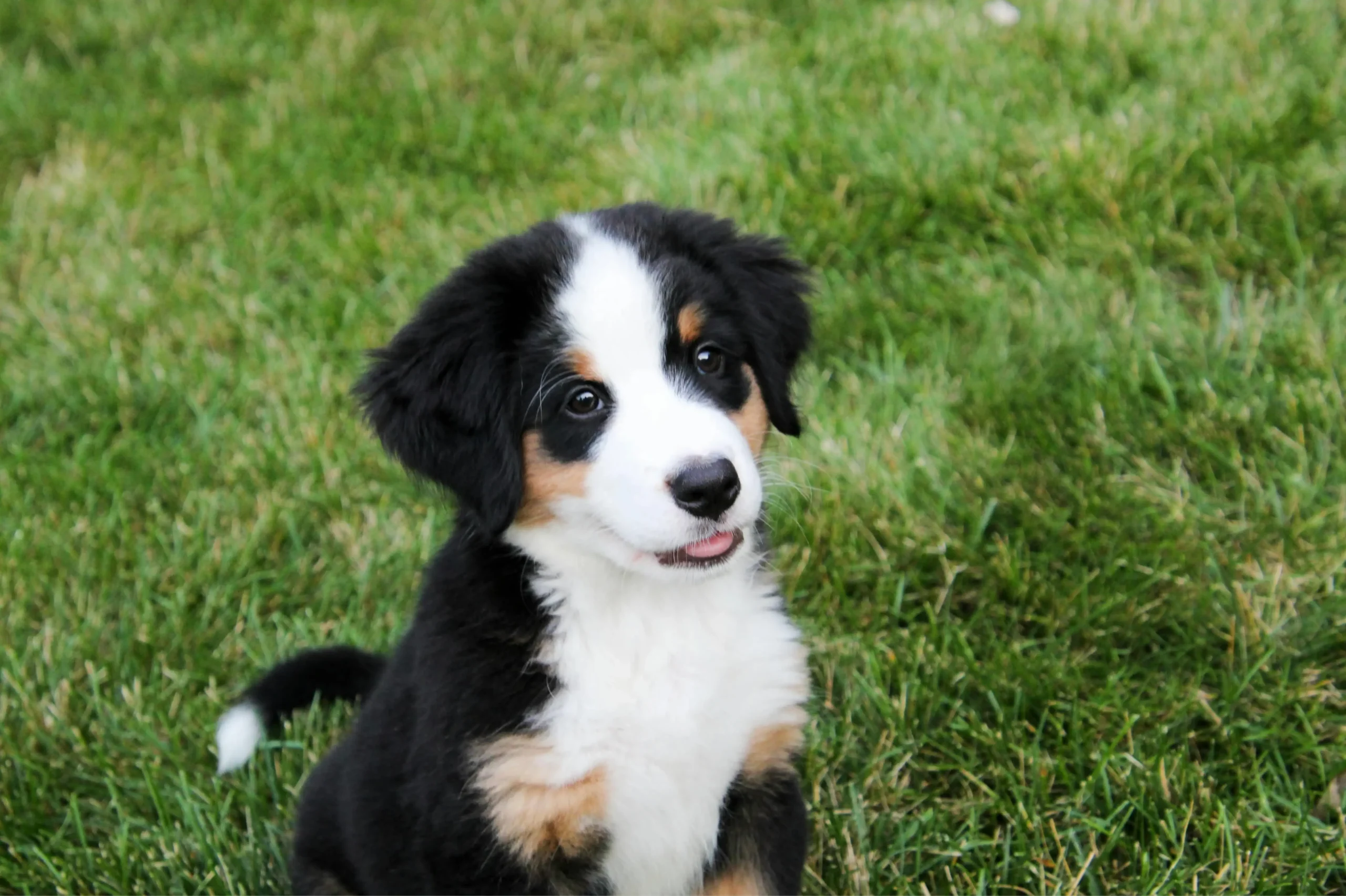
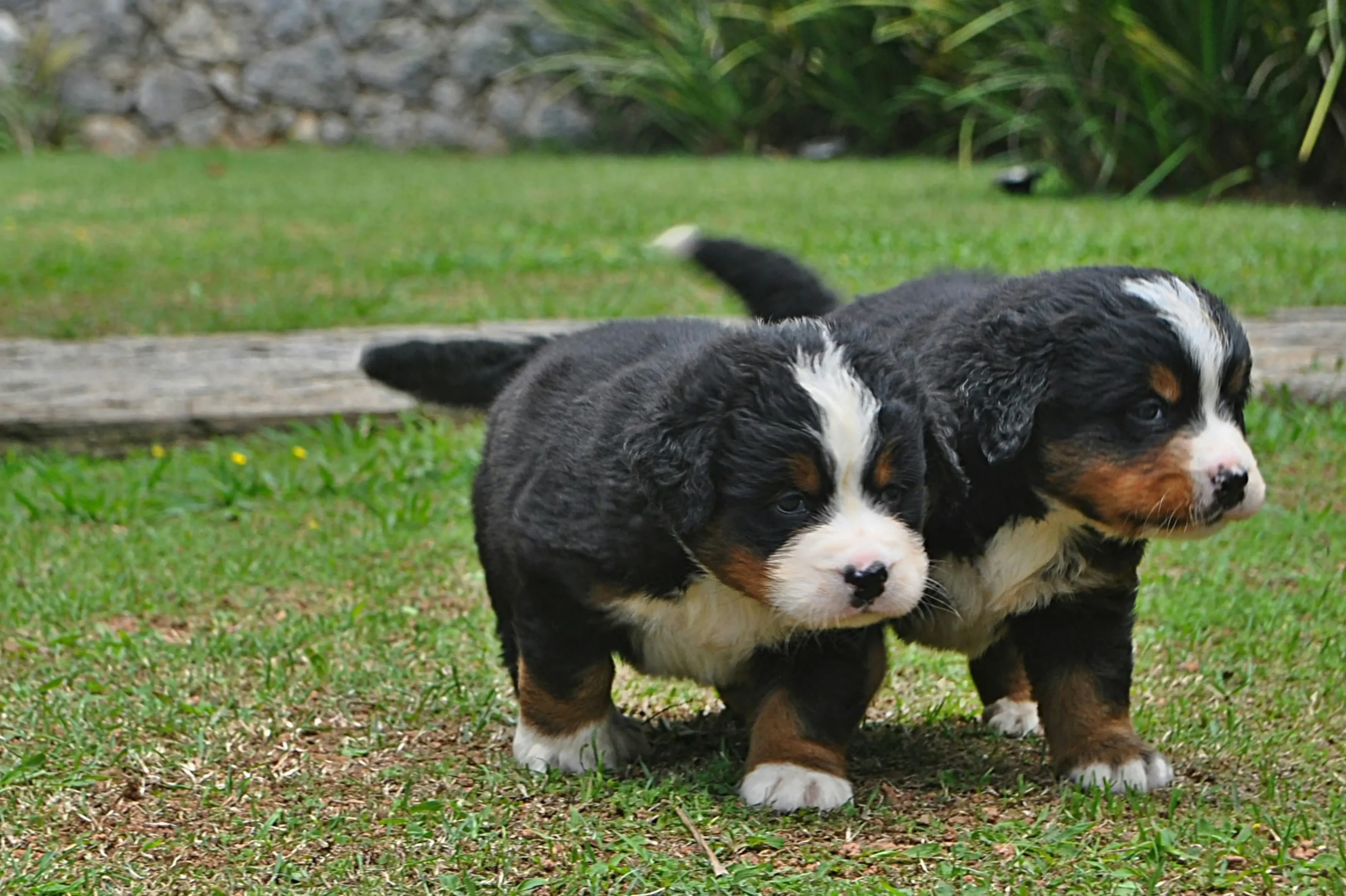
Classic Tricolor: A rich black base with crisp brown and white markings across the face, chest, paws, and tail tip. This is the pattern closest to the Bernese Mountain Dog parent, and it’s breathtaking in its contrast and symmetry. The brown tones can range from deep mahogany rust to a warmer, more amber hue, depending on the Golden Retriever bloodline.
Radiant Tricolor: The pattern that stops strangers on the street. These puppies are born looking nearly identical to Classic Tricolors. Over their first one to two years, a golden wash spreads across their muzzle and chest the result of a rare color gene that produces one of the most stunning coat transformations in any breed. Adult Radiant Tricolors look as though they’ve been lit from within.
Golden: Puppies who inherit the Golden Retriever’s coat more strongly come in soft cream and golden tones. Fluffy, warm, and classic, these puppies look like the ideal of what a puppy should be.
Beyond their coats, Golden Mountain Dog puppies have medium, almond-shaped eyes in warm shades of brown. Their expression from the earliest weeks is distinctly gentle and alert, a combination that makes them nearly impossible not to fall in love with.
How Big Will My Golden Mountain Dog Puppy Get?
Golden Mountain Dogs are a large to giant-sized breed. Fully grown adults stand between 24 and 28 inches at the shoulder and weigh anywhere from 65 to 140 pounds, a range that reflects how variable the blend of parent genetics can be. Males tend toward the larger end.
Females are typically more moderate.
What this means practically is that your small, fluffy puppy will grow and grow quickly. Understanding that trajectory matters for feeding, exercise, and veterinary care.
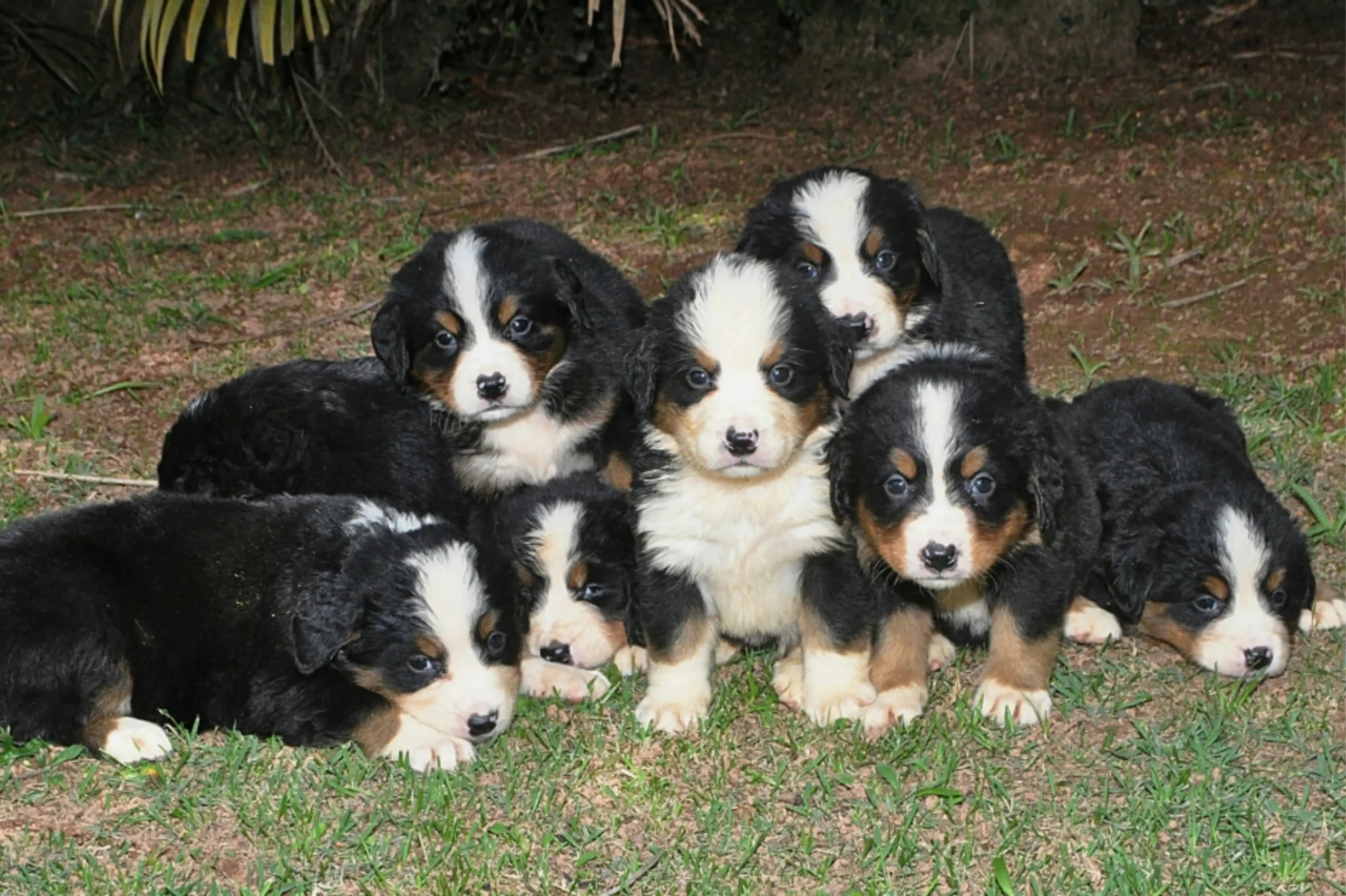
Approximate growth milestones:
| Age | Approximate Weight Range |
|---|---|
| 8 weeks | 10–20 lbs |
| 3 months | 25–40 lbs |
| 6 months | 50–80 lbs |
| 12 months | 65–115 lbs |
| 18 months (adult) | 65–140 lbs |
One of the most important things new owners need to understand: do not over-exercise your puppy before their growth plates close, which typically happens around 18 months. High-impact activities, such as jumping, running on hard surfaces, and intense fetch sessions, can stress developing joints and lead to lifelong orthopedic issues. Keep early exercise low-impact and age-appropriate.
For a full breakdown of safe activities at each age, see our exercise guide.
Temperament: What to Expect Week by Week
Golden Mountain Dog puppies are social, confident, and people-oriented from their very first weeks. But temperament isn’t static; it evolves, and knowing what to expect at each stage helps you support your puppy through every phase.
Weeks 8–12: The Velcro Phase: Your puppy is brand new to the world and will want to be near you constantly. This is normal; lean into it. Gentle handling, calm introductions to new sounds and surfaces, and lots of positive human contact during this build up the foundation of a confident adult dog.
Months 3–6: The Sponge Phase: This is when training clicks fastest. Your puppy is absorbing everything. Your tone, your routines, your reactions. They are eager to please and quick to learn. This is the ideal window for puppy kindergarten, basic obedience, and structured socialization.
Months 6–12: The Adolescent Phase: Like all large breeds, Golden Mountain Dogs go through an adolescent period where they test boundaries and may seem to forget commands they knew perfectly. This phase is normal and temporary. Consistent, patient reinforcement during this period is what separates a well-mannered adult dog from a difficult one.
12–18 Months: By this point, your Golden Mountain Dog is revealing their adult personality, calm, affectionate, and deeply bonded to your family. The energy and the work you invested in their early months are now paying off.
Training Your Golden Mountain Dog Puppy
The Golden Mountain Dog is one of the more trainable large breeds available today, a direct inheritance from two highly intelligent parent breeds. They tend to require fewer repetitions than average to learn new commands, and they respond to human approval with visible enthusiasm.
We’ve written a complete life-stage training guide for this breed covering puppyhood through adulthood; read it here.
The foundation principles:
Positive reinforcement is non-negotiable: These puppies are sensitive. Harsh corrections, raised voices, or punitive methods don’t just fail to work. They actively damage the bond you’re building and can create anxiety. Praise, play, and treats are your tools.
Start before you think you need to: The first day your puppy comes home is day one of training. Waiting until “they’re older” is the single most common mistake new large-breed owners make. Habits form early.
Short sessions beat long ones: Puppies have a short attention window. Three five-minute sessions across the day are more effective than a single twenty-minute session. End every session on a success.
Core skills to prioritize in order:
- Name recognition
- Sit and stay
- Come (recall) potentially life-saving
- Leash manners are critical, given their eventual size
- Crate training: your puppy’s safe space and your sanity saver
- Leave it and drop it
Once the basics are solid, Golden Mountain Dogs genuinely enjoy more advanced training. They thrive with tasks, tricks, and anything that keeps their mind engaged.
Socialization: The Window That Closes
The single highest-impact investment you can make in your Golden Mountain Dog puppy happens between 3 and 14 weeks of age. This is the critical socialization window, a developmental period when the brain is uniquely open to learning that the world is safe, interesting, and navigable.
Golden Mountain Dogs who are well-socialized during this window grow into dogs who are friendly with strangers, comfortable around other dogs, unfazed by loud environments, and genuinely pleasant to take anywhere. Those who miss this window often struggle with anxiety, reactivity, or fearfulness that’s difficult to fully resolve in adulthood.
A practical socialization checklist for your puppy’s first months:
- People: Children of various ages, men with beards, people wearing hats, elderly individuals, people in uniform
- Animals: Other dogs of different sizes and breeds, cats, livestock, if relevant to your lifestyle
- Environments: Car rides, elevators, pet stores, outdoor markets, different floor surfaces (grass, gravel, tile, wood)
- Sounds: Traffic, thunderstorms (recordings), vacuum cleaners, large crowds, music
- Handling: Touching paws, ears, mouth, and tail is essential for stress-free vet visits and grooming throughout their life.
The key principle: Go at your puppy’s pace. Force creates fear. A positive association, even a brief, cautious one, is worth more than a flood of overwhelming exposure. Watch your puppy’s body language and let them set the pace.
Puppy-Proofing Your Home
Golden Mountain Dog puppies are curious, mouthy, and deceptively strong for their age. Before your puppy comes home, walk through your space at puppy-eye level and address every hazard.
Immediate priorities:
- Secure all electrical cords that puppies chew on, and cords that are dangerous
- Store toxic foods completely out of reach. Chocolate, grapes, raisins, onions, xylitol (found in many sugar-free products), macadamia nuts, and raw dough
- Remove or relocate toxic houseplants. Common offenders include pothos, lilies, sago palm, and philodendron
- Block staircase access until your puppy has developed coordination and confidence
- Check your yard fencing for gaps, especially at ground level. Large-breed puppies can squeeze through surprisingly small spaces.
- Set up a dedicated puppy zone with a crate, appropriate bedding, water access, and a safe place.
A properly prepared home doesn’t just protect your belongings; it protects your puppy from preventable accidents during their most vulnerable weeks.
Feeding Your Golden Mountain Dog Puppy
Because these puppies grow into large to giant adults, nutrition during puppyhood is not optional. It’s foundational. The right diet during the first 18 months directly shapes bone density, joint health, coat quality, and long-term metabolic function.
Choose a large-breed puppy formula from a reputable manufacturer. Standard puppy foods are formulated for the growth rates of medium-sized breeds and can inadvertently cause too-rapid growth in large breeds, increasing the risk of joint and skeletal problems.
What to look for on the label:
- Named animal protein (chicken, beef, salmon, lamb) as the first ingredient.
- Controlled calcium and phosphorus levels are critical for steady, healthy bone development.
- DHA for brain and eye development.
- Omega-3 and Omega-6 fatty acids for skin and coat health.
- Glucosamine and chondroitin for joint support.
Feeding structure matters as much as content: Divide daily intake into two to three meals rather than one large feeding. Large and giant breeds carry an elevated risk of gastric dilatation-volvulus (bloat), a life-threatening condition in which the stomach fills with gas and twists. Smaller, more frequent meals, avoiding vigorous exercise directly before or after eating, and using a slow-feeder bowl if your puppy eats quickly are all meaningful preventive steps.
Always provide unlimited fresh water, and revisit your vet’s recommended portion amounts as your puppy grows the amount that was right at four months is not the amount that’s right at eight.
Grooming From Day One
Golden Mountain Dog puppies arrive with soft, fluffy coats that look effortless, and in puppyhood, they largely are. But the dense, medium-to-long adult coat that develops over the first year requires regular care, and the easiest way to ensure your dog tolerates grooming happily as an adult is to make it a normal, positive experience from the very beginning.
See our full grooming and care guide for a week-by-week maintenance routine.
Build these habits early:
Brushing: Start with two to three sessions per week using a slicker brush. As the adult coat comes in, increase to daily brushing if possible. Berners and Golden Mountain Dogs both shed significantly, and regular brushing is the most effective way to manage it.
Nail care: Handle your puppy’s paws daily from week one, even when you’re not trimming. Puppies that grow up having their paws touched calmly will not fight nail trims as adults. Begin actual trimming by eight to ten weeks.
Ear care: Check ears weekly for moisture buildup, odor, or redness. Golden Mountain Dogs with floppy ears are prone to ear infections, and early, consistent checking prevents problems from escalating.
Dental hygiene: Start introducing a puppy-safe toothbrush and toothpaste during the socialization period. Daily brushing is ideal; several times per week is realistic. Dental disease is one of the most common and preventable health problems in dogs.
Bathing: Occasional baths with a puppy-safe, moisturizing shampoo are sufficient. Over-bathing strips the coat’s natural oils. Rinse thoroughly, as residue left in a dense coat can cause skin irritation.
Health: What Gives Golden Mountain Dogs Their Edge
One of the most compelling reasons this crossbreed exists is health. The Bernese Mountain Dog, for all its beauty and temperament, carries a difficult reality: an average lifespan of just 7 to 10 years and an elevated rate of histiocytic sarcoma and other cancers. It is one of the shortest-lived of all large breeds.
The Golden Retriever also has a well-documented cancer susceptibility.
Crossing the two introduces what’s known as hybrid vigor, the tendency of mixed-breed offspring to be healthier and longer-lived than either parent breed. Golden Mountain Dogs have an estimated lifespan of 12 to 15 years, a profound improvement that reflects the genuine benefit of responsible outcrossing.
For a full breakdown of health conditions to watch for as your dog grows, see our Golden Mountain Dog health guide.
Common health considerations to be aware of:
- Hip and elbow dysplasia (both parent breeds are predisposed).
- Bloat / gastric dilatation-volvulus (large and giant breeds).
- Progressive retinal atrophy.
- Certain hereditary heart conditions.
What reputable breeders do to address this: Health screening both parent dogs for hip dysplasia (via OFA or PennHIP), elbow dysplasia, eye conditions, and cardiac issues before breeding. Ask to see documentation. A breeder who is offended by this question is not a breeder you should be working with.
Schedule your puppy’s first veterinary visit within 48 to 72 hours of bringing them home. Your vet will review the breeder’s health records, conduct a baseline examination, establish a vaccination schedule, and set up a deworming and parasite prevention plan.
How Much Does a Golden Mountain Dog Puppy Cost?
From a reputable, health-focused breeder, expect to pay between $2,000 and $3,500. Puppies with rare coat patterns, particularly Radiant Tricolors, often fall at the higher end of this range. Geographic location and breeder reputation also influence pricing.
A price that seems unusually low is almost always a warning sign. Responsible breeders invest heavily in health testing of both parents, raising puppies in enriched home environments, providing early veterinary care, and offering post-adoption support. That investment is reflected in the price. Puppies from breeders cutting these corners frequently cost owners significantly more in veterinary bills within the first few years.
The questions every prospective buyer should ask:
- Can I see health clearances for both parents?
- Where are the puppies being raised? (Home-raised, not kennel-raised, is strongly preferable)
- What socialization have the puppies received before going home?
- Do you offer a health guarantee? What does it cover?
- Are you available for support after I bring my puppy home?
- What happens if I can no longer keep the dog?
A great breeder will also interview you, asking about your lifestyle, experience with large breeds, and what you’re looking for. If a breeder asks no questions and has puppies always available, keep looking.
Is a Golden Mountain Dog Puppy Right for You?
Golden Mountain Dog puppies thrive in homes where they are genuinely part of family life, not left alone in a yard or crate for long hours. They form deep attachments and can develop separation anxiety if not gradually acclimated to alone time from puppyhood. Crate training from day one is not optional. It’s one of the kindest things you can do for your dog.
They are ideal for:
- Active families with children of any age.
- Homes with other pets, including cats (with proper introduction).
- First-time large-breed owners who are committed to training and socialization.
- People with access to outdoor space; a yard is not required, but regular access to outdoor exercise is.
They are less suited for:
- People who are away from home for long, unpredictable hours regularly.
- Very small living spaces with no outdoor access.
- Owners who are not prepared for shedding, grooming, and the logistical realities of a 100-pound dog.
If you can offer time, consistency, and companionship, a Golden Mountain Dog puppy will repay you with a decade or more of loyalty, warmth, and the particular joy of sharing your life with a dog that is, by almost any measure, extraordinary.
FAQs
How long do Golden Mountain Dog puppies sleep?
Between 16 and 20 hours a day, which is completely normal. Sleep is when puppies grow and process everything they’ve learned. Let them rest.
When do Golden Mountain Dog puppies calm down?
Expect the adolescent energy peak between 6 and 14 months. Most Golden Mountain Dogs genuinely settle into their calm, steady adult temperament by 18 months to 2 years.
How much exercise does a Golden Mountain Dog puppy need?
Use the 5-minute rule: 5 minutes of exercise per month of age, twice daily. Keep it low-impact until 18 months. Their growth plates are still developing, and high-impact activity can cause lasting joint damage.
Are Golden Mountain Dog puppies good with kids?
Among the best. They inherit the Golden Retriever’s patience and the Bernese’s gentleness, a hard combination to beat around children. Always supervise young kids with any dog, regardless of breed.
Do Golden Mountain Dog puppies shed a lot?
Yes. Moderate to heavy year-round, with heavier seasonal blowouts. Brush several times a week and invest in a good vacuum. It’s manageable, but don’t go in unprepared.
How do I stop my puppy from biting?
Say “ouch,” withdraw attention calmly, and redirect to a chew toy. Repeat consistently for weeks, not days. It’s normal puppy behavior. Patience and consistency resolve it.
When should I start training?
Day one. An 8-week-old puppy can already learn their name, sit, and crate basics. Waiting until they’re “older” is the most common mistake large-breed owners make.
Can they be left alone?
For short periods, yes, if you’ve conditioned them gradually from the start. They are not suited to 8-hour solitary days. If that’s your reality regularly, consider doggy daycare, or whether this is the right breed for you.
What vaccinations do they need?
Core vaccines include DHPP (distemper, parvovirus, adenovirus) and rabies. Your vet may add bordetella, leptospirosis, or Lyme, depending on your location and lifestyle. The first vet visit should happen within 72 hours of bringing your puppy home.
Are Golden Mountain Dogs rare?
Not extremely, but good breeders often have waitlists, which is actually a green flag. If a breeder always has puppies immediately available, that’s worth questioning.
What’s the difference between a Golden Mountain Dog and a Bernedoodle?
Both cross with a Bernese Mountain Dog. Bernedoodles use a Poodle for a low-shedding coat. Golden Mountain Dogs use a Golden Retriever for temperament and family compatibility. GMDs shed more but are widely regarded as having a more balanced, predictable personality.