Everything You Need to Know Before You Bring One Home
What Is a Golden Mountain Dog?
Picture this: the warm, sun-soaked personality of a Golden Retriever mixed with the steady, majestic calm of a Bernese Mountain Dog. That’s the Golden Mountain Dog, a large, lovable crossbreed that has been winning hearts across the world. Also sometimes called the Golden Berner or Bernese Golden Mountain Dog, this designer hybrid is one of the most affectionate and family-friendly dogs you’ll ever come across.
It’s not a purebred, and it’s not recognized by the American Kennel Club (AKC), but that hasn’t slowed down its growing popularity one bit. Families love the Golden Mountain Dog because it brings together the best qualities of both parent breeds in one fluffy, devoted package. And once you’ve spent five minutes with one of these dogs, it’s easy to understand why people fall head over heels.
So if you’re seriously thinking about adding one to your family or you’re just curious, this in-depth Golden Mountain Dog breed info guide covers everything you need to know. From size and appearance to health concerns, feeding, and temperament, we’ve got it all laid out for you.
A Brief History of the Breed
The history of the Golden Mountain Dog is a little murky, as is the case with many hybrid breeds. Some sources suggest the crossbreeding started as early as the 1970s, while others point to the 1990s or even the early 2000s. The truth is, no single breeder has been credited with “creating” the breed; it likely developed organically as breeders sought to combine the best traits of the Golden Retriever and the Bernese Mountain Dog.
To understand where this dog comes from, you have to look at its parents.
The Golden Retriever
The Golden Retriever traces its roots back to the Scottish Highlands in the late 1800s. Originally bred as a gundog to retrieve waterfowl and upland game for hunters, the Golden Retriever became one of the most popular family dogs in the world thanks to its intelligence, patience, and unwavering friendliness. The AKC officially recognized the breed in 1925, and it has consistently ranked among the top three most popular breeds in the United States ever since.
The Bernese Mountain Dog
The Bernese Mountain Dog has a completely different origin story. It hails from the cold, rugged farmlands of the Swiss Alps, where it was used as a working farm dog pulling carts, herding livestock, and keeping watch over the property. This breed was recognized by the AKC in 1937. The Berner, as fans call it, is known for its calm, devoted nature and its striking tri-colored coat. Unfortunately, Bernese Mountain Dogs have a relatively short lifespan and are prone to certain health conditions, which is actually one of the key reasons breeders started crossing them with Golden Retrievers.
The combination of these two breeds creates what many dog lovers consider a near-perfect companion dog.
Golden Mountain Dog Size and Physical Appearance
One of the first things people notice about the Golden Mountain Dog is just how big it is. This is a large to giant-sized breed, and there’s no getting around that.
How Big Does a Golden Mountain Dog Get?
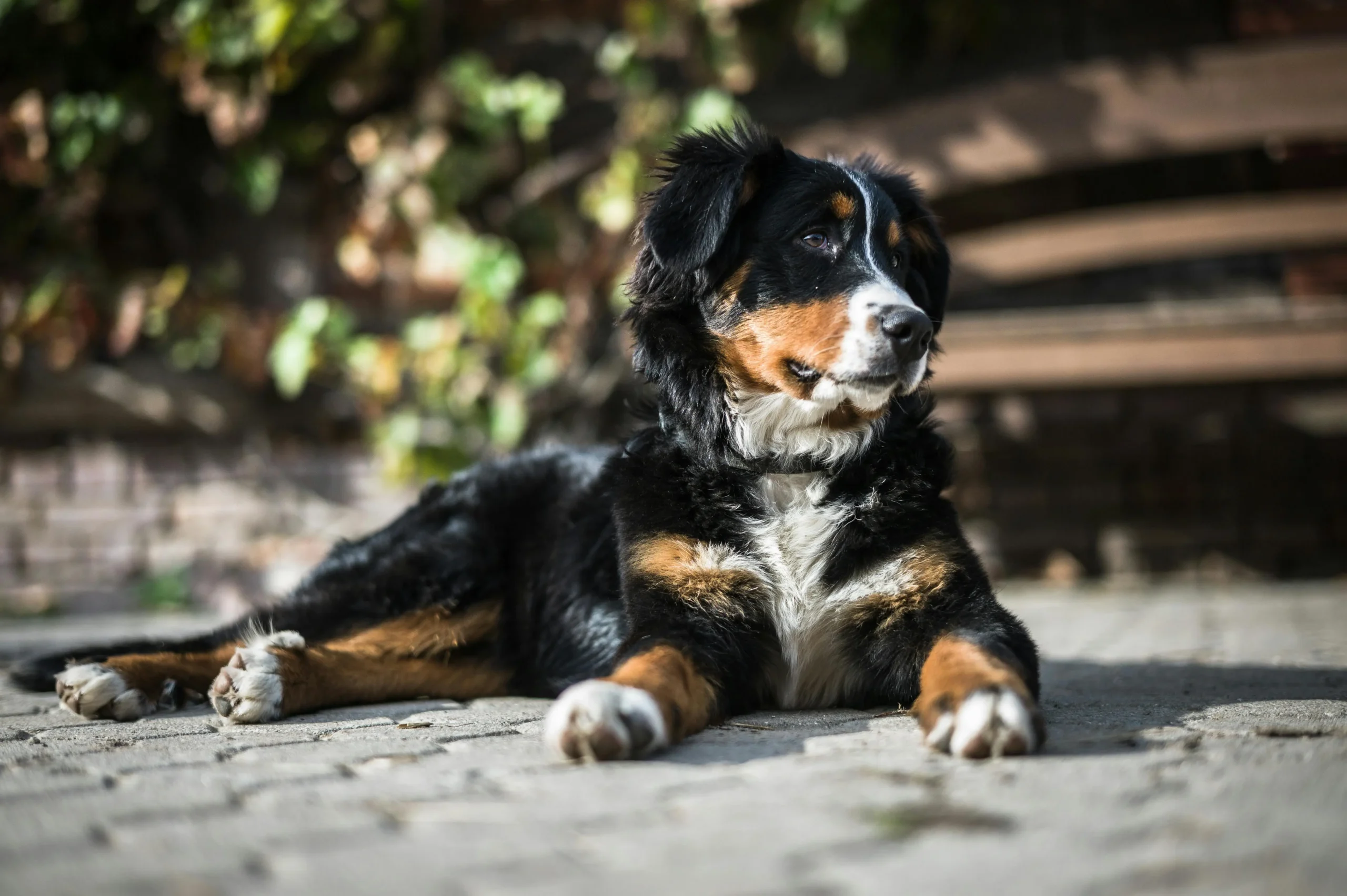
Golden Mountain Dogs typically weigh between 65 and 140 pounds and stand 24 to 28 inches tall at the shoulder. There can be quite a bit of variation in size depending on which parent breed they take after more closely. A pup that favors the Bernese side might be bigger and stockier, while one that leans toward the Golden side may be slightly leaner and more athletic.
Coat and Colors
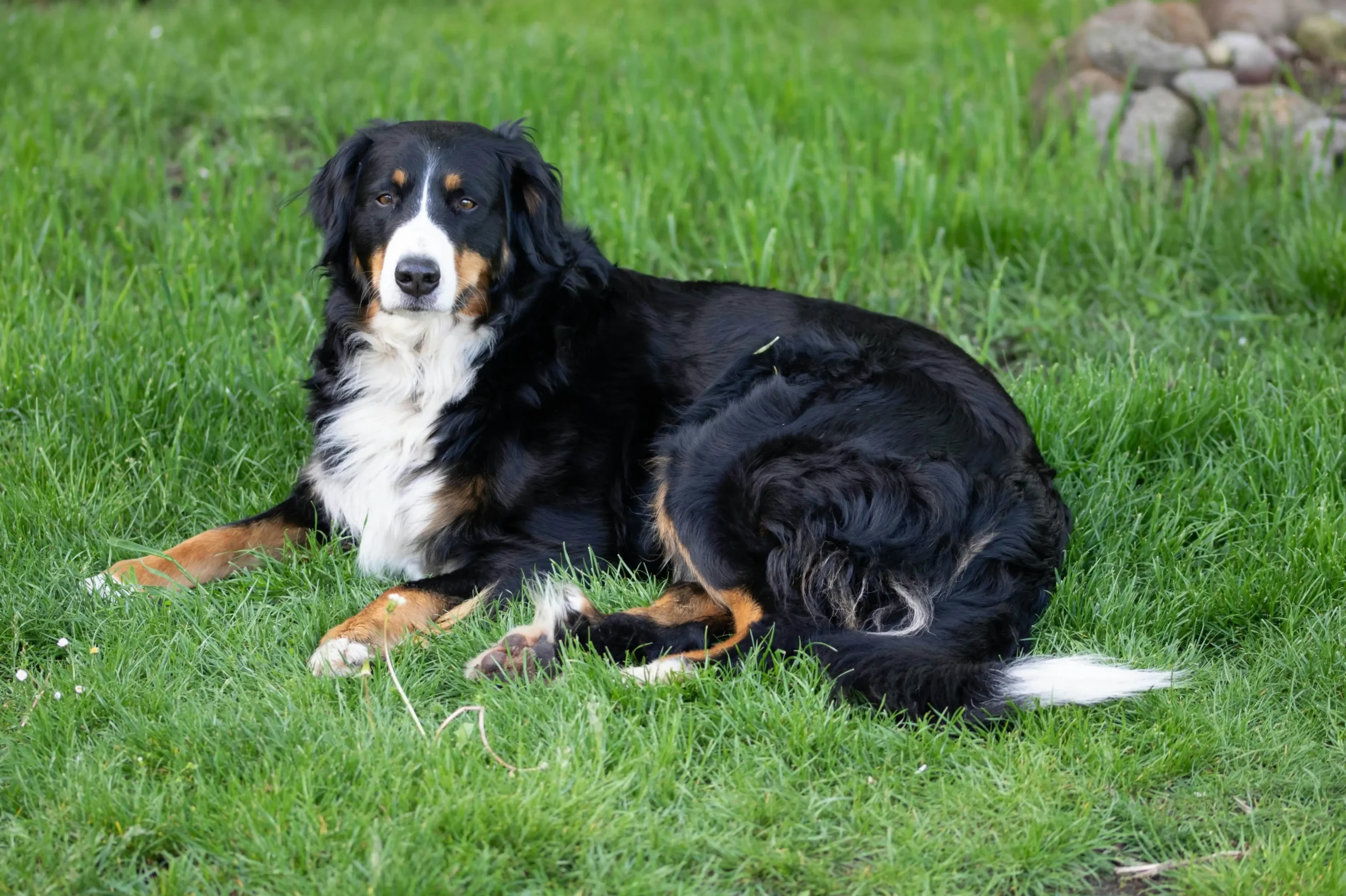
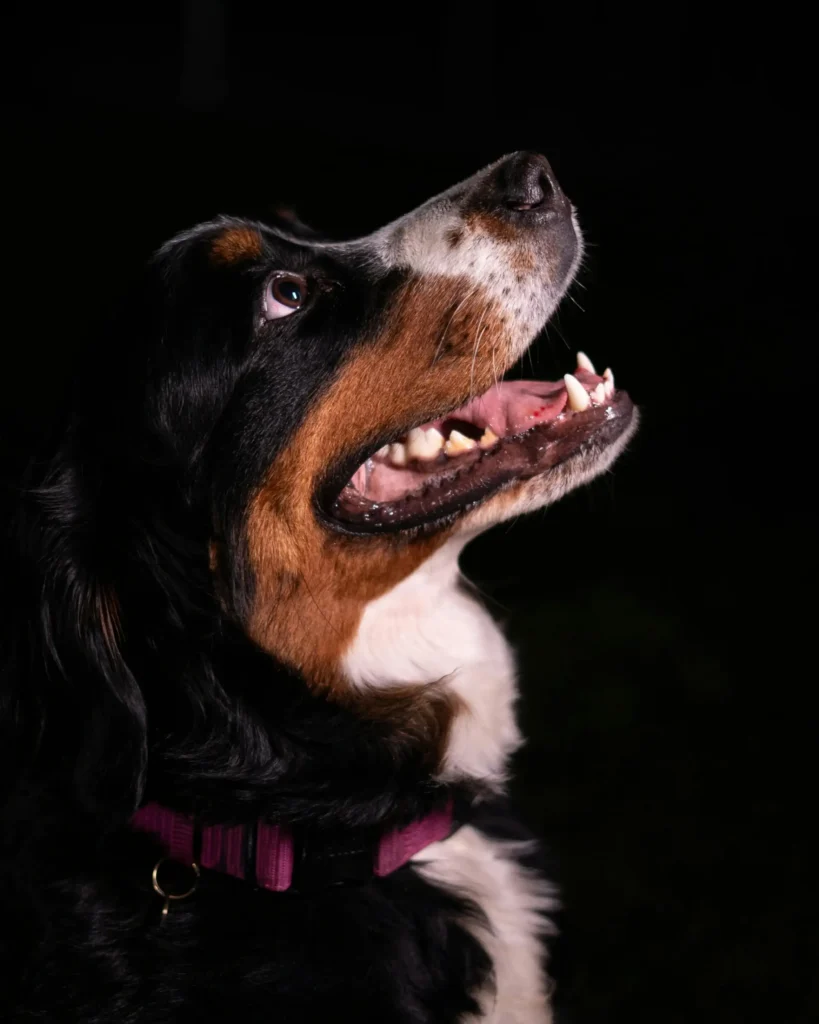
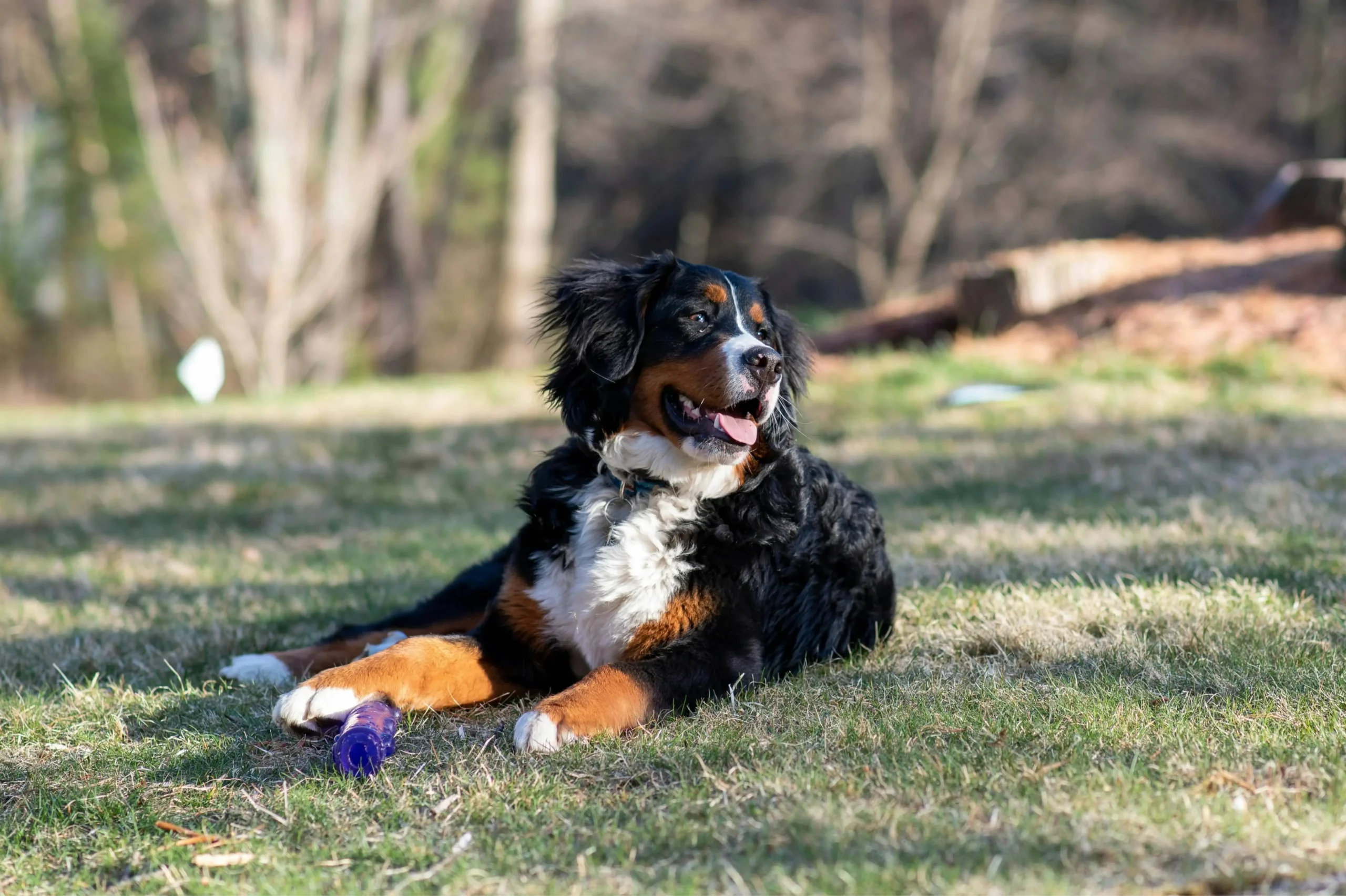
The Golden Mountain Dog coat is one of its most striking features. It’s typically long, dense, and either straight or slightly wavy, with a soft undercoat that provides excellent insulation. Because both parent breeds have thick double coats, this mix is naturally well-suited for cooler climates.
Color variations can include:
- Classic Tricolor: A black base with rust and white markings on the face, chest, and feet, closely resembling the Bernese Mountain Dog
- Radiant Tricolor starts like the classic pattern but develops golden tones across the face and chest as the dog matures, thanks to a unique color gene.
- Golden or cream, closer to the Golden Retriever’s coloring, ranging from pale cream to rich golden
Some dogs carry a mix of all these tones, making each Golden Mountain Dog look truly one of a kind.
Facial Features and Build
The Golden Mountain Dog has a broad, well-proportioned head with a strong muzzle and expressive, almond-shaped eyes that are usually brown. The ears are medium-length, floppy, and set fairly high on the head. The body is muscular and sturdy, with a thick, feathered tail that wags almost constantly. These dogs carry themselves with a quiet confidence — big, powerful, but never threatening.
Golden Mountain Dog Temperament
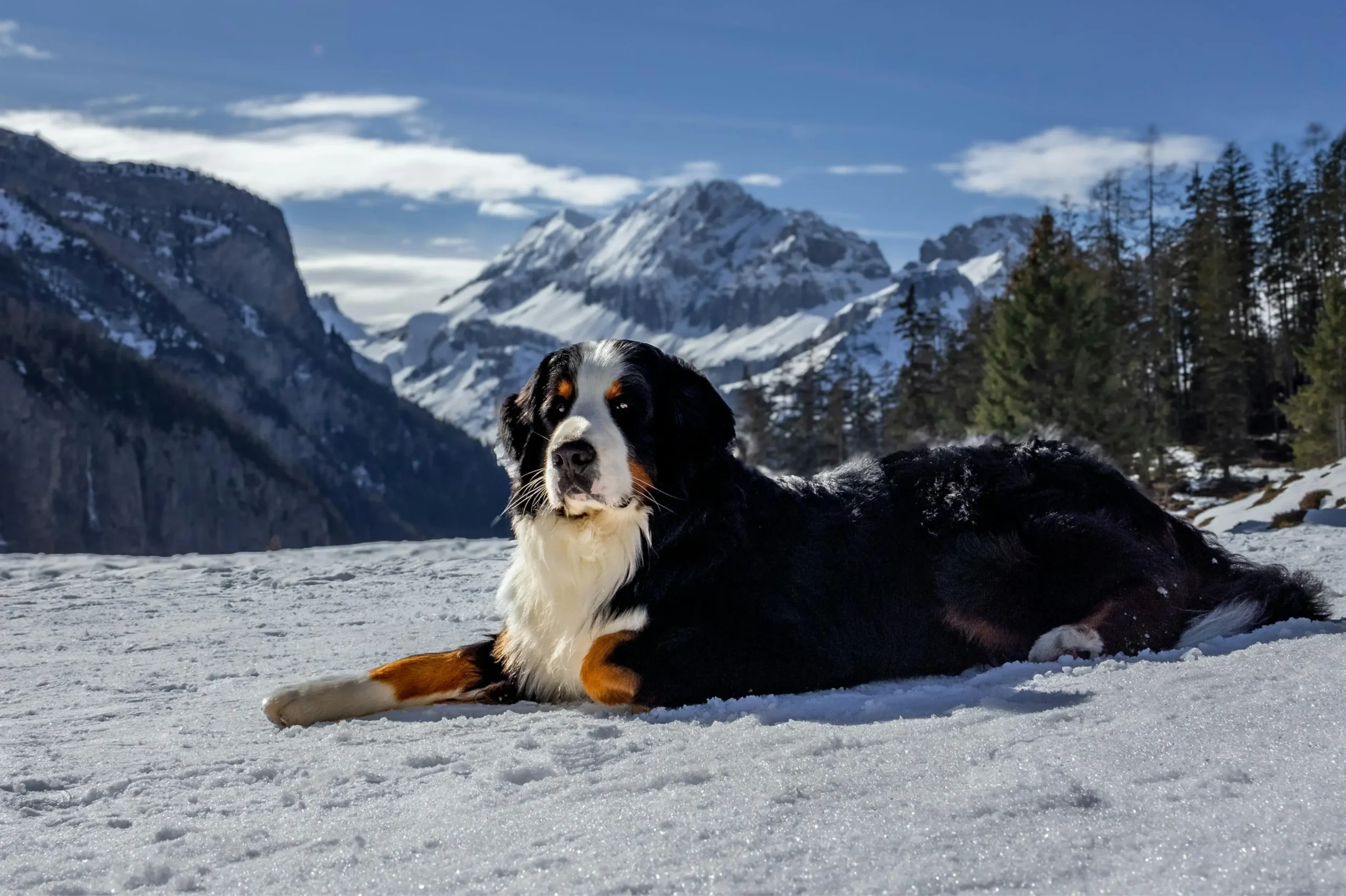
If there’s one thing that truly defines the Golden Mountain Dog, it’s its temperament. This breed is warm, gentle, and deeply loyal. People who own one often describe it as the dog that seems to read their emotions, knowing exactly when to bounce around playfully and when to quietly sit beside you and offer comfort.
Affectionate and Family-Oriented
The Golden Mountain Dog temperament is shaped by two of the most people-oriented breeds in the world. These dogs absolutely love their families. They form deep bonds and genuinely crave human attention and affection. They’re not the type to curl up in a corner and mind their own business; they want to be right in the middle of whatever you’re doing.
They’re wonderful with children, too. Despite their large size, they tend to be patient and gentle around kids. That said, because they can be unaware of how big they are, it’s a good idea to supervise interactions with very young children.
Socialize with everyone
Golden Mountain Dogs are naturally social. They tend to get along well with strangers, other dogs, and even cats and other household pets. Their prey drive is lower than that of many other breeds, which makes multi-pet households much easier to manage. That said, early socialization is still important. The earlier you expose your pup to different people, animals, and environments, the more balanced and confident they’ll grow up to be.
Are They Good Guard Dogs?
Honestly? Not really. The Golden Mountain Dog will alert you if something seems off, but don’t count on them to be a serious guard dog. They’re far too friendly with strangers. A burglar is more likely to get a wagging tail than a warning growl. They make great watchdogs in the sense that they’ll bark to let you know someone’s at the door, but beyond that, their friendliness tends to take over.
Prone to Separation Anxiety
One thing to be aware of: Golden Mountain Dogs do not enjoy being left alone for long periods. They’re very people-oriented, and extended isolation can lead to anxiety, destructive behavior, or excessive barking. If you work long hours and can’t arrange for someone to check in on your dog, this might be something to think carefully about before getting one.
Intelligence and Trainability
The Golden Mountain Dog is a highly intelligent breed that picks up new commands quickly. Both parent breeds were working dogs, and that heritage comes through in their eagerness to learn and please their owners. Most owners find that their Golden Mountain Dog needs far fewer repetitions to learn a new command than the average dog.
Training Tips
Positive reinforcement works best. These dogs respond well to praise, treats, and rewards. Harsh corrections or punishment-based training methods tend to backfire. They can make a sensitive dog shut down rather than cooperate.
Clicker training is especially popular with this breed. The clear communication it provides helps dogs understand exactly what behavior is being rewarded, which makes the learning process faster and more enjoyable for both dog and owner.
Start training early. Golden Mountain Dog puppies are easier to shape than adult dogs, and the habits you build in those first few months will stick for life. Focus on basic obedience. Sit, stay, come, leave it- and work on loose-leash walking early, because a 100-pound dog that pulls is no fun for anyone.
Socialization should start from day one. Take your pup to different places, introduce them to different people, and let them experience a variety of sounds, textures, and situations while they’re still young.
Exercise and Activity Needs
Golden Mountain Dogs have moderate exercise needs. They’re not as high-energy as a Border Collie or a Labrador Retriever, but they’re not couch potatoes either. Think of them as enthusiastic hikers who also love a lazy Sunday on the sofa.
Plan for at least 60 to 90 minutes of physical activity each day. This can be broken up into two or more sessions, a long morning walk, and an evening play session in the yard, for example.
They love activities like:
- Hiking and trail walking: They were practically made for it.
- Swimming: Both parent breeds enjoy the water.
- Fetch: The Golden Retriever in them never really disappears.
- Tug of war and interactive play: Great for mental and physical stimulation.
- Puzzle toys and training games: Keep their intelligent minds sharp.
A fenced yard is a big plus with this breed. They love having space to run and explore. Without enough physical and mental activity, Golden Mountain Dogs can get bored, and a bored big dog can find some very creative ways to redecorate your home.
It’s also worth noting that this breed does better in cooler climates. Their thick double coat can make hot weather uncomfortable, so always provide shade, fresh water, and limit strenuous activity during the hottest parts of the day.
Grooming Your Golden Mountain Dog
Let’s be honest, the Golden Mountain Dog is not a low-maintenance breed when it comes to grooming. That gorgeous coat requires regular attention.
Brushing and Shedding
Golden Mountain Dogs shed a lot. Both parent breeds are known for heavy shedding, especially during seasonal changes in spring and fall. Expect to find dog hair on your clothes, furniture, and probably your food at some point. It comes with the territory.
Brush your dog’s coat at least three to four times a week to prevent tangles and matting. During heavy shedding seasons, daily brushing is a good idea. A slicker brush and a de-shedding tool like a metal rake comb are your best friends here.
Bathing and Other Grooming Needs
Bathe your Golden Mountain Dog roughly once a month, or more frequently if they’ve been rolling around in mud (which, knowing this breed, is a very real possibility). Use a dog-specific shampoo that’s gentle on their skin.
Beyond brushing and bathing:
- Check and clean their ears: Regularly, floppy ears trap moisture and can be prone to infections
- Trim their nails: Every three to four weeks, or when you hear them clicking on hard floors
- Brush their teeth: A few times a week, using a dog-safe toothpaste
- Trim the fur around their paws and ears: To keep things neat and prevent matting in those areas
If grooming feels overwhelming, professional grooming every six to eight weeks is a perfectly reasonable option.
Feeding and Nutrition
Proper nutrition is one of the most important things you can do for your Golden Mountain Dog’s long-term health. Large breeds have specific dietary needs that differ from smaller dogs, especially when it comes to joint support and controlled growth.
Puppy Feeding
Golden Mountain Dog puppies grow fast, and their nutritional needs reflect that. Feed a high-quality large breed puppy formula that supports steady, healthy bone and muscle development without causing excessively rapid growth, which can strain developing joints.
Follow the feeding guidelines on the packaging as a starting point, but adjust based on your individual puppy’s growth and energy levels. Your vet is always a great resource here.
Adult Feeding
Adult Golden Mountain Dogs typically need around 3 to 5 cups of high-quality dry dog food per day, split into two meals. The exact amount depends on their size, activity level, and the caloric density of the food you’re using.
Look for formulas where a real protein source (like chicken, salmon, or beef) is listed as the first ingredient. Avoid foods packed with fillers, artificial preservatives, or excessive amounts of corn and soy. Some Golden Mountain Dogs can be prone to skin sensitivities, so a limited ingredient or grain-free formula may be worth trying if your dog shows signs of allergies.
Avoid free feeding, measure portions, and stick to a schedule. This breed is prone to bloat (more on that below), and consistent meal timing can help reduce that risk.
Golden Mountain Dog Health and Lifespan
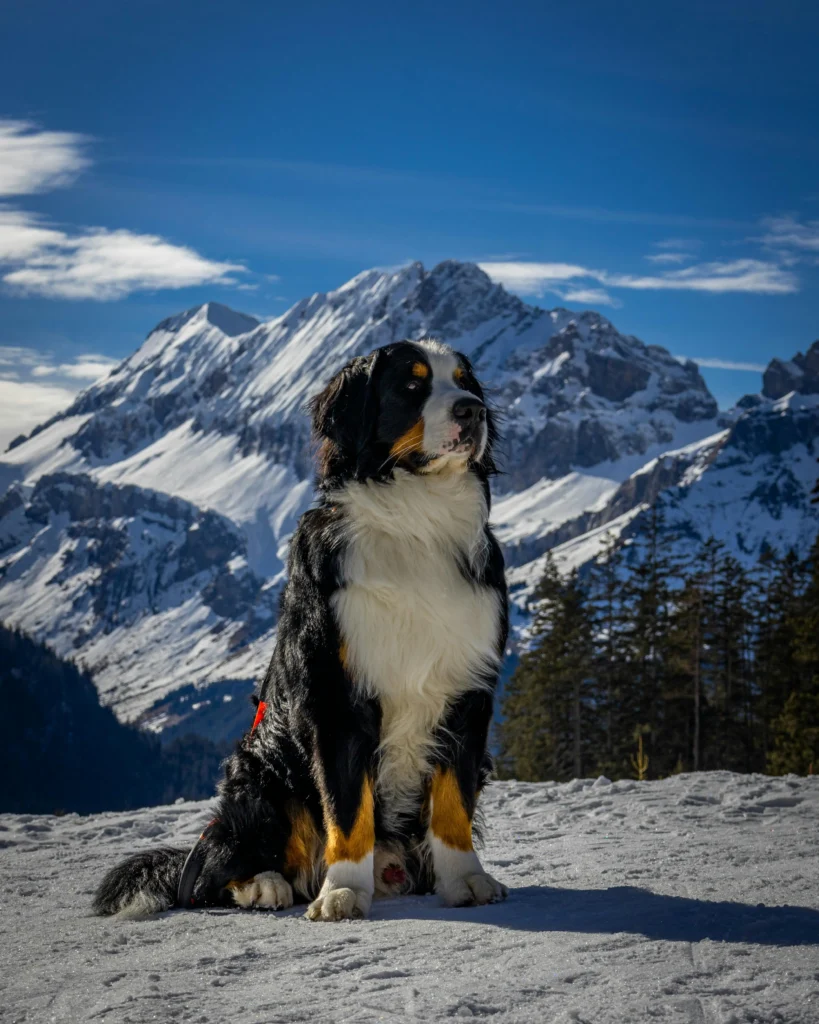
One of the biggest selling points of the Golden Mountain Dog is its health. Because it’s a crossbreed, it benefits from what’s known as hybrid vigor, the tendency for mixed-breed dogs to be healthier and longer-lived than their purebred counterparts. This is especially significant when it comes to the Bernese Mountain Dog side of the equation, since Berners are unfortunately one of the shorter-lived large breeds and have higher-than-average rates of cancer.
The Golden Mountain Dog lifespan typically ranges from 9 to 15 years, with many sources placing the average around 9 to 12 years. Compared to the Bernese Mountain Dog’s average of 7 to 10 years, that’s a meaningful improvement.
Common Health Issues
While generally healthy, Golden Mountain Dogs can still be susceptible to certain conditions inherited from their parent breeds. Being aware of these helps you catch problems early and give your dog the best possible care.
Hip and Elbow Dysplasia: Both the Golden Retriever and Bernese Mountain Dog are prone to joint issues, making this a concern for Golden Mountain Dogs as well. Dysplasia occurs when the ball-and-socket joints don’t develop properly, leading to pain and reduced mobility over time. Keeping your dog at a healthy weight and avoiding excessive high-impact exercise during puppyhood can help reduce the risk.
Bloat (Gastric Dilatation-Volvulus or GDV): This is a serious and potentially life-threatening condition in large, deep-chested breeds. The stomach fills with gas and can twist on itself, cutting off the blood supply. Signs include a distended abdomen, unproductive retching, and restlessness. It’s a medical emergency. Feeding two smaller meals instead of one large one, and avoiding vigorous exercise right after eating, can lower the risk.
Cancer: Both parent breeds have elevated cancer rates, particularly the Bernese Mountain Dog. Regular vet check-ups and early screening can make a real difference in outcomes.
Heart Conditions: Cardiac issues, including subvalvular aortic stenosis, can appear in this breed. A cardiac exam from a veterinary cardiologist is a recommended health screening for breeding dogs.
Eye Conditions: Progressive Retinal Atrophy (PRA) and other hereditary eye conditions can occur. An ophthalmologist’s evaluation is part of the responsible health testing picture.
Hypothyroidism: An underactive thyroid can cause weight gain, lethargy, and skin problems. It’s manageable with medication once diagnosed.
Von Willebrand’s Disease: A bleeding disorder that affects blood clotting. Genetic testing can screen for this in parent dogs.
Recommended Health Screenings
If you’re getting a Golden Mountain Dog from a breeder, ask about health testing for the parent dogs. Reputable breeders screen for hip and elbow dysplasia, cardiac conditions, eye conditions, and Von Willebrand’s disease. Health-tested parents significantly reduce, though don’t eliminate, the chances of their puppies inheriting these conditions.
For your own dog, routine vet visits twice a year (especially as they age), up-to-date vaccinations, heartworm and flea prevention, and dental care go a long way toward a long, healthy life.
Finding a Golden Mountain Dog: Breeders and Adoption
Because of their rising popularity, Golden Mountain Dogs are unfortunately also a target for irresponsible breeders and puppy mills. Doing your homework before purchasing a puppy is essential.
What to Look for in a Reputable Breeder
A good breeder will:
- Provide health testing records for both parent dogs
- Welcome you to visit and meet the puppy’s parents
- Ask you questions about your lifestyle and experience with large breeds
- Offer references from previous buyers
- Provide vaccination records and a health guarantee with the puppy
Red flags include breeders who won’t let you visit, don’t have health documentation, offer multiple breeds with little specialization, or push you to decide quickly. Trust your gut if something feels off; walk away.
Adoption Option
It’s rare to find a Golden Mountain Dog in a shelter, but it’s not impossible. Check breed-specific rescues for both Golden Retrievers and Bernese Mountain Dogs; sometimes, mixed breeds end up in these rescues, too. Sites like Petfinder and Adopt-a-Pet are also worth checking regularly.
Is the Golden Mountain Dog Right for You?
Before you fall completely in love (and it’s very easy to do), take an honest look at whether this breed matches your lifestyle.
A Golden Mountain Dog might be your perfect match if:
- You have an active family that enjoys outdoor adventures
- You have plenty of space, ideally a yard
- You work from home or have flexible hours
- You enjoy dog grooming or are happy to pay a groomer regularly
- You want a loyal, affectionate dog that will be devoted to your whole family
This breed might not be the right fit if:
- You live in a small apartment with no outdoor access
- You’re away from home for most of the day
- You or a family member has severe dog allergies
- You prefer a lower-maintenance, more independent dog
- You live in a very hot climate without air conditioning
Conclusion
The Golden Mountain Dog is more than just a pretty face; it’s a deeply loyal, affectionate, and intelligent companion that brings so much warmth into the lives of families lucky enough to have one. Combining the Golden Retriever’s sunny, eager-to-please personality with the Bernese Mountain Dog’s calm devotion and majestic presence, this hybrid really does feel like the best of both worlds.
Yes, they’re big. Yes, they shed. And yes, they need your time, your attention, and your heart. But what they give back is hard to put into words: unconditional love, unwavering loyalty, and the kind of companionship that makes everyday life better.
If you’re ready to welcome a gentle giant into your home, do your research, find a reputable breeder, and prepare your heart (and your vacuum cleaner) for one of the most rewarding dog-owning experiences you’ll ever have.
FAQs
How long does a Golden Mountain Dog live?
The average Golden Mountain Dog lifespan is between 9 and 15 years. Thanks to hybrid vigor from crossbreeding, they tend to live significantly longer than their Bernese Mountain Dog parent, which typically lives 7 to 10 years. Good nutrition, regular veterinary care, and an active lifestyle all play a role in how long your dog lives.
Are Golden Mountain Dogs good with kids?
Absolutely. The Golden Mountain Dog is one of the most family-friendly breeds out there. They’re patient, gentle, and deeply affectionate, natural protectors who love children. The one thing to keep in mind is that because of their large size, they may accidentally knock over very young children while playing. Early training helps them understand how to be gentle around little ones.
Do Golden Mountain Dogs shed a lot?
Yes, they do, and quite a lot at that. Both the Golden Retriever and the Bernese Mountain Dog are heavy shedders, so the Golden Mountain Dog inherits that trait. Regular brushing (at least three to four times a week) is essential to manage the shedding and prevent matting. If dog hair on your furniture is a dealbreaker, this may not be the breed for you.
How much exercise does a Golden Mountain Dog need?
Plan for 60 to 90 minutes of daily physical activity. This can include walks, hiking, swimming, fetch, or play sessions in the yard. They enjoy moderate to vigorous activity and make wonderful outdoor adventure companions. Without enough exercise, they can become restless and may develop behavioral issues.
Are Golden Mountain Dogs easy to train?
Yes, they’re generally considered easy to train. The Golden Mountain Dog is intelligent, eager to please, and responds very well to positive reinforcement methods. They tend to pick up new commands quickly and can even be trained for advanced obedience, agility, or service dog work with the right guidance.
How much does a Golden Mountain Dog cost?
You can generally expect to pay between $1,500 and $3,500 for a Golden Mountain Dog puppy from a reputable breeder, with most falling between $2,000 and $2,800.
Can Golden Mountain Dogs live in apartments?
It’s not ideal. Given their large size and moderate-to-high energy levels, Golden Mountain Dogs do best in homes with access to a yard. That said, if you’re highly committed to meeting their exercise needs through daily outdoor activities, it can work in a large apartment, but it takes real dedication and planning.
Do Golden Mountain Dogs do well in hot weather?
Not particularly. Their thick double coats are designed for cooler climates, much like their Bernese Mountain Dog parent. During hot weather, keep them in air-conditioned spaces, avoid exercise during peak heat, and always provide access to fresh water and shade. Overheating is a real risk for this breed.